


Thomas Mann House Events Archive
July 2026
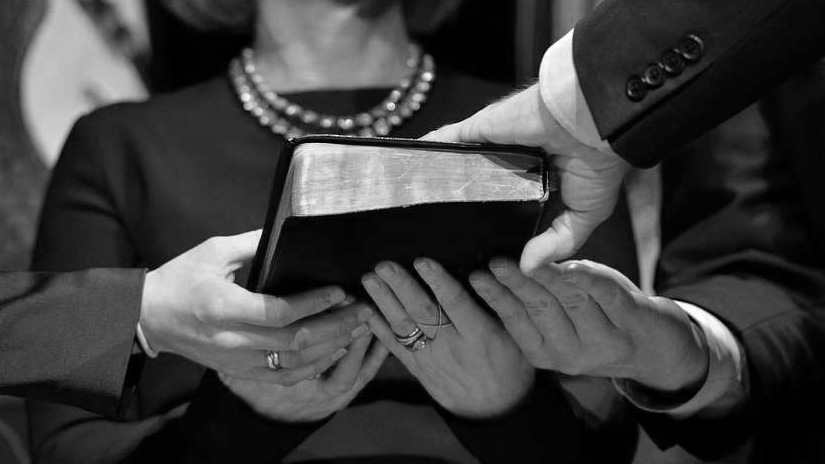
How Religion Shapes Society
Thomas Mann House (1550 N San Remo Drive, CA 90272)
Language: English ・ By Invitation Only
Info
Participants

Sanyu A. Mojola is Professor of Sociology and Public Affairs and the Maurice P. During Professor of Demographic Studies at Princeton University. She has held numerous fellowships, including at Harvard University’s Hutchins Center for African and African American Research. In 2016, she received the Distinguished Scholarly Book Award (Best Book of the Year) of the American Sociological Association. Her most recent book is entitled “Death by Design: Producing Racial Health Inequality in the Shadow of the Capitol” (University of California Press, 2025).

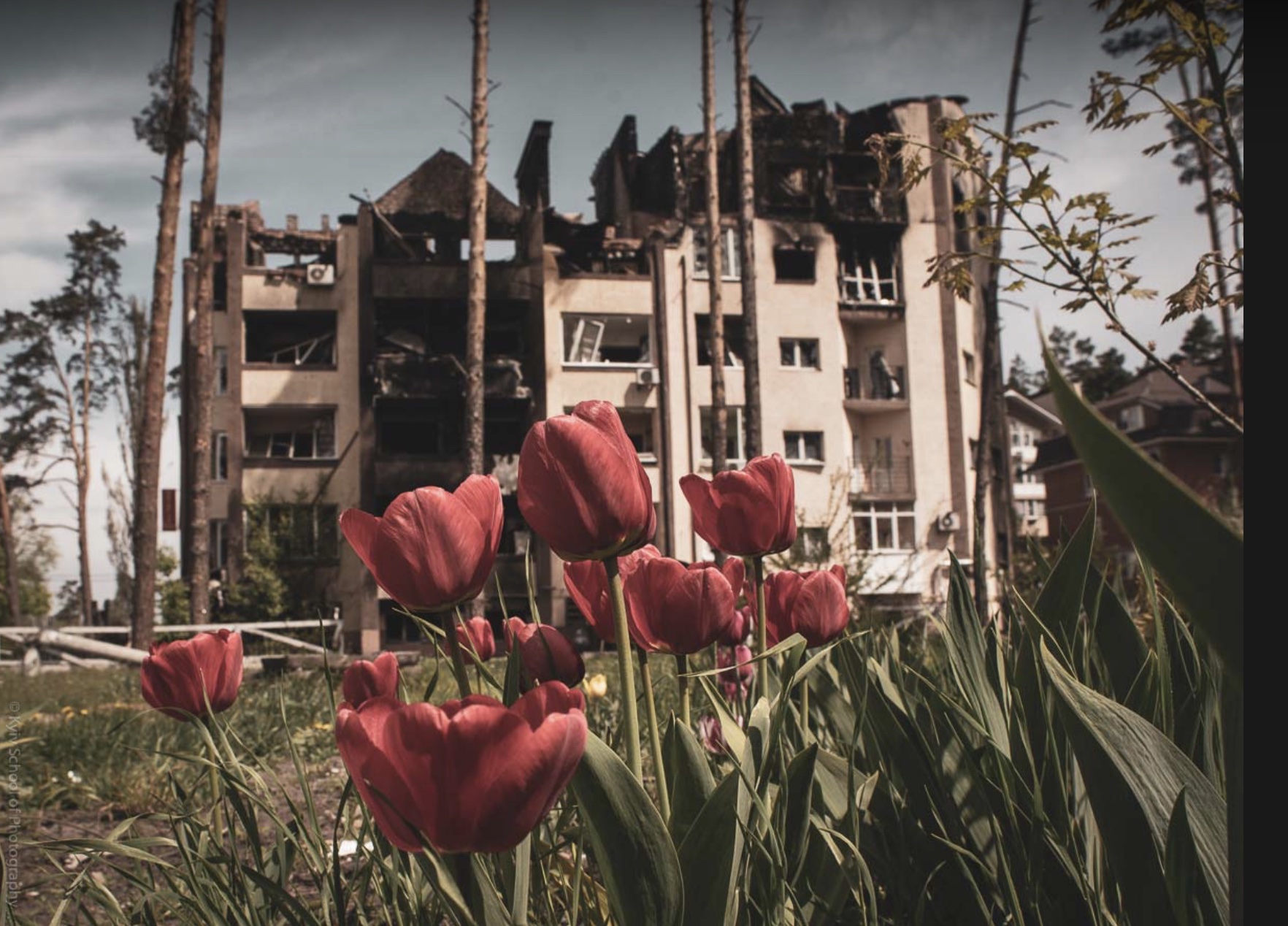
Breaking the Silence
Thomas Mann House (1550 N San Remo Drive, CA 90272)
Language: English ・ By Invitation Only
Info
Participants

Margaryta Surzhenko is a writer. She graduated from the Interregional Academy of Personnel Management (IAPM) in Kyiv in 2012 with a degree in political science and published her first book about the war in Luhansk in 2014. In 2015, she founded a website featuring innovative fairy tales, which brings together more than 300 texts. Margaryta Surzhenko has published five novels. Since the beginning of the war in Ukraine, she has been living in Germany and teaching creative writing. During her time in Los Angeles, Margaryta Surzhenko reflects on her experiences with the war in Ukraine and the peculiarities of life in multicultural Germany, adding a transatlantic perspective. She processes these thoughts in prose form, focusing on advocating democratic values and a culture of communication that connects people. Surzhenko is a 2026 Thomas Mann Fellow.


Andrew Krastins is a violinist, scholar, and collector whose work bridges musical performance, historical research, and cultural preservation. Based in Los Angeles, he has a longstanding interest in American cultural history, particularly the musical traditions of the nineteenth and early twentieth centuries. An avid collector of historical scores, recordings, and archival materials, he is deeply committed to preserving and reanimating the material history of music. In addition to his performance work, Krastins has supported scholarly initiatives dedicated to historical collections and archival engagement. His musical interests range from classical repertoire to lesser-known historical works, reflecting a broader fascination with the relationship between music, memory, and cultural transmission. His performances are marked by a deep sensitivity to musical storytelling and historical context, making him an especially compelling collaborator in programs that connect literature, history, and live performance.
Can the Energy Crisis Finally Unite Us?
ASU California Center (1111 South Broadway Los Angeles, CA 90015)

Language: English ・ Live Stream Available
Info
Participants

Heela Rasool-Ayub is Director of the Planetary Politics initiative at New America. She spent over a decade as a Foreign Service Officer at USAID, leading democracy, human rights, and governance programs and has worked in Afghanistan, Ethiopia, Ukraine, Southern Africa and beyond. She served as Director for Global Engagement at the National Security Council, where she advanced the Obama administration's global civil society initiative. As Director of Donor Engagement at USAID, she elevated the U.S. foreign policy agenda in multilateral institutions, negotiating instruments in the G20 and other international platforms. Before government service, she investigated fraud and corruption at the World Bank. She holds a J.D. from McGeorge School of Law and a B.A. from UC Davis.

Carlos Curbelo is a former Republican U.S. Congressman and political analyst who represented South Florida in Congress from 2015 to 2019. Recognized as one of the House’s most bipartisan members, he worked on issues including energy and environmental policy, immigration, tax reform, and international affairs. In 2017, he received the John F. Kennedy Library Foundation’s New Frontier Award for promoting bipartisan cooperation on environmental policy. Today, he co-leads Vocero, a public affairs and communications firm, and serves as an on-air analyst for national media outlets.

Uwe Jean Heuser studied economics in Bonn and Berkeley, earned a Master of Public Administration at Harvard as a McCloy Scholar, and completed his doctorate in Cologne. He joined the editorial team of DIE ZEIT at the end of 1991, where he founded the Reform Workshop and headed the business editorial team for 20 years before founding the newspaper’s new “Green” section in 2021. He is an award-winning non-fiction author and serves as an honorary professor at Leuphana University. At the Thomas Mann House, Uwe Jean Heuser will deal with the climate discourse, which is highly ideologized and often ends in conflict instead of uniting society. Both in Germany and the United States, he will look for new transatlantic approaches that can create the basis for a new narrative for climate change that reaches a larger number of people.

Kate Yoder is a journalist at the environmental magazine Grist, where she covers the politics of climate change through the lens of language, culture, and history. She has won a SEAL Environmental Journalism Award and a Folio Magazine Award for Essays & Criticism. Her work has appeared in The Guardian, WIRED, and Scientific American, and she’s regularly featured on NPR’s Here & Now. In 2022, she coined the term “heatflation” to describe how rising temperatures drive up food prices, a concept that spread to international news coverage and policy discussions.
Partner
A Collaboration with Zócalo Public Square, in Partnership with ASU Global Futures Laboratory and Palisadian Post.



Zócalo Public Square values audience safety. During events at ASU California Center, as bag searches are not permitted, only clear bags (maximum size 12” x 6” x 12”) and small clutches (maximum size 8 ½” x 5 ½”) are allowed in the venue. Zócalo may be able to provide a limited number of clear bags to help accommodate guests. Questions? Ask us at events@zocalopublicsquare.org. The ASU California Center is inclusive and accessible for all. A platform wheelchair lift is available at our main entrance via Broadway (ground level). Upon checking in for the event, please inform Zócalo staff if you need assistance, or contact events@zocalopublicsquare.org for additional information.