


Thomas Mann House Events Archive
November 2025
Why Read Thomas Mann in the 21st Century?
Thomas Mann House (1550 N San Remo Drive, CA 90272)

Language: English ・ By invitation only
Info
In her forthcoming book The Magician’s Mother: A Story of Coffee, Race, and German Culture, Veronika Fuechtner rethinks Mann’s family history and cultural milieu through a transnational and postcolonial lens, focusing on Thomas Mann’s Brazilian mother Júlia da Silva Bruhns. Renowned writer and critic Morten Høi Jensen’s forthcoming book The Master of Contradictions – Thomas Mann and the Making of “The Magic Mountain”, explores the philosophical and artistic tensions that shaped one of Mann’s most celebrated works – The Magic Mountain. Tobias Boes, author of the acclaimed 2019 bookThomas Mann’s War: Literature, Politics, and the World Republic of Letters, returns with A Reader’s Guide to Thomas Mann’s “Doctor Faustus”, a powerful companion to Mann’s ambitious postwar novel, which Mann completed during his exile in Los Angeles. Boes’ upcoming reader is supposed to reintroduce the canonical novel to a new readership in the U.S., also focusing on the novel’s political urgency. These authors from the fields of literary studies, history, and cultural criticism will delve into Mann’s political engagement, his literary innovations, and the questions his work continues to pose in our time.
In a conversation moderated by 2025 Thomas Mann Fellow and journalist Sandra Kegel, the panel will discuss the question: Why should we read Thomas Mann today? What can his literature and political activism offer contemporary readers? How does Mann speak to a new generation—grappling with crises of democracy, culture, and identity? Join us for an evening on Mann’s continued relevance, contradictions, and ongoing resonance in the twenty-first century.
Participants

Veronika Fuechtner is Chair of Comparative Literature and Associate Professor of German Studies at Dartmouth. She also teaches in Jewish Studies, and Women's, Gender and Sexuality Studies. In addition, she occasionally has held an appointment as Adjunct Associate Professor in the Department of Medical Education at the Geisel School of Medicine. She is the author of Berlin Psychoanalytic (University of California Press, 2011) and the co-editor of Imagining Germany, Imagining Asia (Camden House, 2013) and A Global History of Sexual Science 1880-1960 (University of California Press, 2017). She recently completed a monograph on Thomas and Heinrich Mann's Brazilian mother, Julia Mann, and the Mann family construction of race and “Germanness." And she is the editor of the forthcoming Norton critical edition of Susan Bernofsky’s translation of Thomas Mann’s The Magic Mountain. Her research interests include the history of psychoanalysis and sexology, the relationship between science and culture, discourses on race and ethnicity, German-language modernism, contemporary culture, German-language film, and global cultural and scientific histories. She has received research grants from the American Council of Learned Societies, The American Academy in Berlin, the American Psychoanalytic Association, the Deutsche Schillergesellschaft, the Max Planck Institute for the History of Science, the National Endowment for the Humanities and the Social Sciences Research Council. She is serving on the editorial board of PMLA and she chairs the conduct and anti-harassment committee of the GSA.

Morten Høi Jensen is a Danish-American writer and critic and the author of A Difficult Death: The Life and Work of Jens Peter Jacobsen(2017) and The Master of Contradictions: Thomas Mann and the Making of The Magic Mountain (2025). He has contributed to Liberties, the New York Review of Books, Washington Post, the Wall Street Journal, and Commonweal.

Sandra Kegel studied literature, theater, film and media studies in Aix-en-Provence, Vienna and Frankfurt. She has been an editor at the Frankfurter Allgemeine Zeitung since 1999. She worked in media and literature departments for many years and has been head of the FAZfeatures section since 2019. She also works as a juror and presenter and is a regular critic on the literary program “Buchzeit” (3sat). In 2005, she was awarded the Ravensburg Media Prize. During her 2025 fellowship at the Thomas Mann House, Sandra Kegel is investigating the extent to which the decline of the (local) press is promoting populism and mistrust in democratic structures and what lessons can be learned from the findings for the German newspaper landscape. She will also examine the use of AI in media companies and its implications for the journalistic ecosystem.
Partner
This event is part of Mann 2025: 150 years of Thomas Mann

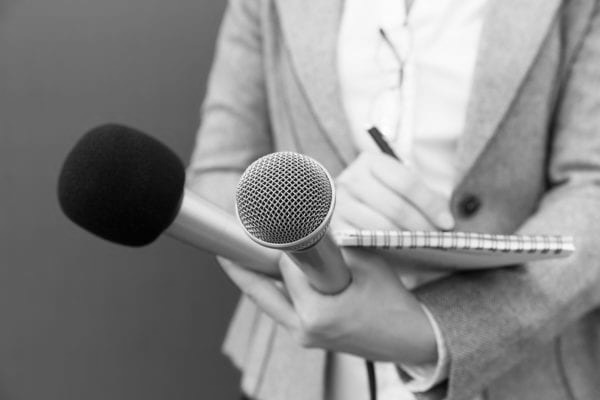
Transatlantic Perspectives on Journalism
Thomas Mann House (1550 N San Remo Drive, CA 90272)
Language: English ・ By invitation only
Info
Participants

Lorraine Ali is television critic of the Los Angeles Times. Previously, she was a senior writer for the Calendar section where she covered culture at large, entertainment and American Muslim issues. Ali is an award-winning journalist and Los Angeles native who has written in publications ranging from the New York Times to Rolling Stone and GQ. She was formerly The Times’ music editor and before that, a senior writer and music critic with Newsweek magazine. Her writing awards include Best Online Feature from the New York Association of Black Journalists in 2007, an Excellence in Journalism Award in 2002 from the National Arab Journalists Association. In 1996, she won Best National Feature Story honors at the Music Journalism Awards.

Gustavo Arellano is a columnist for the Los Angeles Times, covering Southern California everything and a bunch of the West and beyond. He was a finalist for the 2025 Pulitzer Prize in Commentary and the Mike Royko Award for Commentary and Column Writing and was part of the team that won the 2023 Pulitzer Prize in Breaking News for reporting on a leaked audio recording that upended Los Angeles politics. Arellano previously worked at OC Weekly, where he was an investigative reporter for 15 years and editor for six, wrote a column called ¡Ask a Mexican! and is the author of “Taco USA: How Mexican Food Conquered America.” He’s the child of two Mexican immigrants, one of whom came to this country in the trunk of a Chevy.

Susanne Beyer studied German literature, history and journalism in Bamberg and Vienna. After her vocational training at Deutsche Journalistenschule (DJS), she initially worked as a culture editor at SPIEGEL, a German weekly news magazine and one of the largest such publications in Europe, where she was deputy head of department. She was deputy editor-in-chief of SPIEGEL for four years, then worked as a journalist in SPIEGEL's Berlin office and now writes for the editorial team. Alongside her job, Susanne Beyer is currently training to become a mediator. Beyer is a 2025 Thomas Mann Fellow.

Cordula Meyer, born in 1971, has been deputy editor-in-chief of SPIEGEL, Germanys leading political website und magazin, since 2024. She studied political science and communication in Hamburg and at the University of Arizona in Tucson, graduating with an M.A. She has worked at SPIEGEL since 1999, initially as a reporter at the National Desk and later as a correspondent in Washington, covering the election and presidency of Barack Obama. She became the head of the National Desk in 2015. In 2023, she became a member of SPIEGEL's editorial desk. As a reporter she has covered how 9/11 was planned in Hamburg and the nuclear meltdown in Fukushima. She has been involved in volunteer work with Netzwerk Recherche, an organization promoting investigative reporting, for many years.


Heinrich Wefing is a multi-award-winning journalist, architecture critic and book author. After many years at the German newspaper Frankfurter Allgemeine Zeitung (FAZ) as cultural correspondent in Berlin, and West Coast correspondent in San Francisco, he moved to DIE ZEIT in 2008, a major German national weekly newspaper. Since 2018, he has headed the politics department there. Wefing is one of the initiators of the Charter of Fundamental Digital Rights of the European Union, which was published at the end of November 2016.
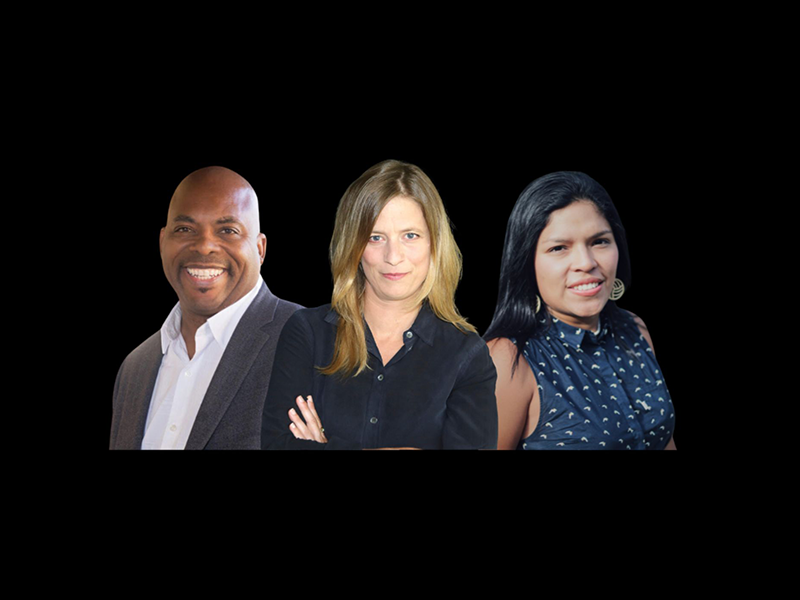
Stories That Matter: How Local Journalism Strengthens the Ties of Community and Democracy
Goethe-Institut San Francisco (657 Howard St, San Francisco, CA 94105)
Language: English
Info
Participants

Sandra Kegel studied literature, theater, film and media studies in Aix-en-Provence, Vienna and Frankfurt. She has been an editor at the Frankfurter Allgemeine Zeitung since 1999. She worked in the media and literature departments for many years and has been head of the FAZ features section since 2019. She also works as a juror and presenter and is a regular critic on the literary program “Buchzeit” (3sat). In 2005, she was awarded the Ravensburg Media Prize.

Liliana Michelena is a multimedia journalist and producer from Lima, Peru, whose career spans international reporting and community-focused storytelling. She has covered stories ranging from Olympic competition to political accountability for The New York Times, The Guardian, The Associated Press, and Spain's El País. A former elite soccer player and graduate of UC Berkeley's Graduate School of Journalism, Liliana works across languages, borders, and media formats. Her interdisciplinary approach to journalism draws on investigative reporting, narrative storytelling, and audience engagement, navigating the tensions between global news coverage and the deeply local work of connecting with communities.

Michael Bolden is the UC Berkeley School of Journalism’s new dean. He previously served as the CEO of the American Press Institute and has had a distinguished career spanning The Washington Post, San Francisco Chronicle, Knight Foundation, Stanford University and API. He has worked as a reporter, editor, educator and nonprofit leader. His research focuses on leadership and belonging in news organizations and community-engaged journalism.
Partner
This event is a collaboration with the Goethe-Institute San Francisco.

Where do we go from here? Studying the Middle East in Times of a Breakdown of Democratic Institutions and International Law
University of Maryland

Language: English ・ By invitation only
Info
We are living through two mutually reinforcing crises: the war between Hamas and Israel, and the rise of far-right movements on both sides of the Atlantic. In response, historians and scholars of the modern Middle East joined colleagues from other disciplines from the United States, Germany, Israel, and Palestine for a one-day symposium at the University of Maryland. The gathering explored how the present moment is being instrumentalized—on both continents—to set (academic) communities against each other, to deploy accusations of antisemitism in ways that silence entire groups of stakeholders, and to pursue troubling agendas directed at those whose work engages the region.
Over the past two years, longstanding scholarly networks have fractured. The participants therefore represented a range of discourse communities, united by their commitment to sustaining dialogue grounded in free expression, academic freedom, and respect for human dignity.
The symposium’s contributions addressed a broad set of topics: the AAUP/MESA vs. Rubio court victory; the expanding securitization of university campuses; internal academic boycotts; the cancellation of scholarly events and appointments; and the difficulties of teaching Israel/Palestine and Jewish–Muslim themed classes in a time of war.
The symposium was organized by 2025 Thomas Mann Fellow and Islamic Studies scholar Sonja Hegazy and Peter Wien, historian of the Middle East at UMD.
Participants

Sonja Hegasy is Deputy Director of the Leibniz-Zentrum Moderner Orient in Berlin. She studied Arabic and Islamic Studies at Columbia University and completed her doctorate in political science at FU Berlin. In 2019–2021, she held the professorship for Postcolonial Studies at the Barenboim-Said Akademie in Berlin. In 2023, she was a Senior Fellow at the M.S. Merian – R. Tagore International Centre of Advanced Studies “Metamorphoses of the Political” in Delhi.

Peter Wien is Professor for the History of the Modern Middle East at the University of Maryland in College Park. He received his PhD in 2003 from the University of Bonn, Germany, and Master degrees from the Universities of Oxford and Heidelberg. He taught at Al-Akhawayn University in Ifrane, Morocco, and was a fellow of the ZMO (Centre for Modern Oriental Studies) in Berlin. He is the author of the books Arab Nationalism: The Politics of History and Culture in the Modern Middle East (London: Routledge, 2017) and Iraqi Arab Nationalism: Authoritarian, Totalitarian and Pro-Fascist Inclinations, 1932-1941 (London: Routledge, 2006).
Partner
This event is co-organized with the University of Maryland
