


Thomas Mann House Events Archive
January 2020
Jan Philipp Reemtsma: Democracy and Emphasis
Thomas Mann House 1550 (San Remo Drive Pacific Palisades, CA 90272)

Information
What does it mean to speak about - and for - democracy in an emphatic sense? Is there a common project committed democrats stand for and even would fight for in difficult and dangerous times?
Renowned German Scholar and writer Jan Philipp Reemtsma will speak in the series “55 Voices for Democracy” at the Thomas Mann House. The series expands the 55 BBC radio messages Thomas Mann sent from his house in California to thousands of listeners from Germany, Switzerland, Sweden and occupied Netherlands and Czechia. In his monthly radio speeches between October 1940 and November 1945 Mann spoke out against fascist ideas and became the most significant German voice in exile.
As the political crisis in Europe and the US deepens, the time demands a strong response for the preservation of social and liberal values, for the renewal of our political vocabulary, and for overcoming political separation and manipulation. Thomas Mann’s belief that the “social renewal of democracy is both condition and warrant for its victory” rings true more than ever before.
“55 Voices for Democracy” brings together internationally esteemed intellectuals, scientists, and artists to present ideas for the renewal of democracy. Like Thomas Mann, they will deliver short “radio” talks combined with public events. Previous contributors include Francis Fukuyama, Timothy Snyder and Ananya Roy. Renowned intellectuals like Orhan Pamuk, Bruce Ackerman, Seyla Benhabib and Larry Diamond have already confirmed their participation.
The event with Jan Philipp Reemtsma on January 9th is moderated by USC Professor and Director of the Annenberg Media Center, Christina Bellantoni.
Participants
Jan Philipp Reemtsma is Professor for New German Literature at the University of Hamburg and an internationally renowned author of works such as Gewalt als Lebensform (2016), Vertrauen und Gewalt (2008, translated as Trust and Violence, 2012) or Gebt der Erinnerung Namen (2007, with Saul Friedländer). The traveling exhibitions on the crimes of the Wehrmacht that he organized with the Hamburg Institute for Social Research, have had a lasting impact on the process of accounting for the past in Germany.
Christina Bellantoni is a USC Professor of Professional Practice and Director of the Annenberg Media Center. A multimedia journalist with over 20 years of experience, she has worked as a reporter, editor, producer, and analyst across numerous platforms. She is the former assistant managing editor of the Los Angeles Times and editor-in-chief at Roll Call.
Partners
Media partners for the series are Deutschlandfunk, Los Angeles Review of Books and Süddeutsche Zeitung.


“We now live in a modern house. We like it nonetheless.”
Berlin
Info
The Thomas Mann House in Pacific Palisades:
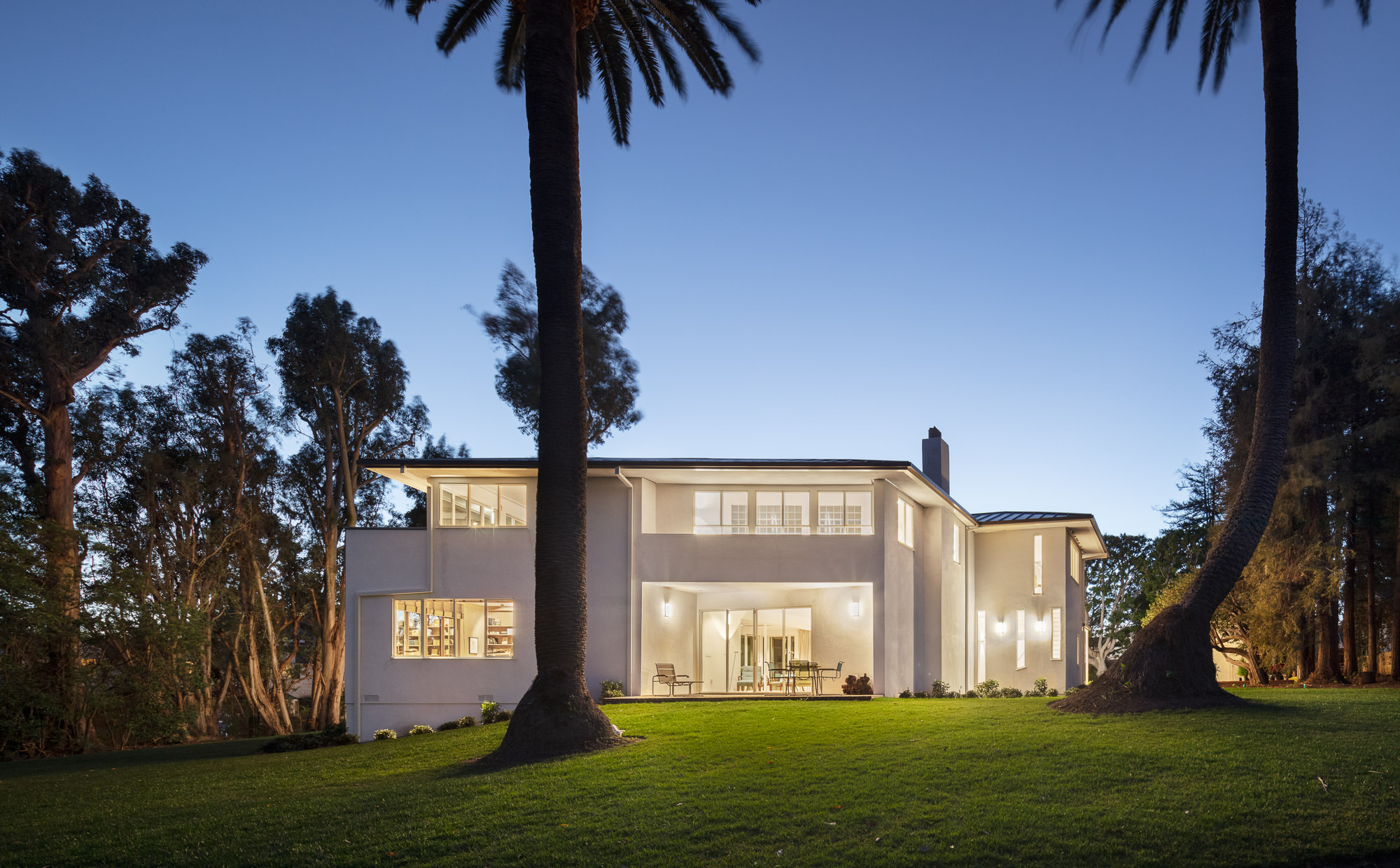
In 1941, Thomas Mann commissioned the architect Julius Ralph Davidson, one of the leading representatives of Californian modernism, to build a new house on San Remo Drive in the hills of Pacific Palisades. He lived there with Katia Mann from February 1942 until his return to Europe in 1952.
In his study, he wrote, among other works, the fourth volume of the *Joseph* tetralogy, *Doctor Faustus*, and *The Holy Sinner*. From this Californian exile, Thomas Mann also addressed “German listeners!” through his BBC radio broadcasts and engaged deeply in his writings with questions about the roots of fascism, democratic renewal, freedom, migration, and exile.
Since its reopening in 2018 as a residency and venue for intellectual exchange, the Thomas Mann House remains committed to this spirit. The lecture presents the history of the house from its origins to its present-day role.
Andreas Platthaus: Four mysterious years
Berlin-Brandenburgische Akademie der Wissenschaften (Markgrafenstr. 38, 10117 Berlin)
Info
The most prominent of Feininger’s colleagues left Germany in 1933, but the great Bauhaus Representative stayed, even though his American citizenship would have facilitated a refuge in the US enormously. What motivated Feininger to remain in Germany after the Nazis had broken up the Bauhaus? And why did he eventually decide to return to the U.S., which he had not set foot in for half a century? For several months, 2019 Thomas Mann fellow Andreas Platthaus has researched that question in several American archives. His lecture marks the start of „Salonabend“ in collaboration with the Studienstiftung des Deutschen Volkes. Since 2015, VATMH and Studienstiftung have been awarding a fellowship for visual artists at Villa Aurora.
This Event is part of Salon Sophie Charlotte 2020: Weltbilder
Since the beginning of time mankind has created images of the world it lives in. As early as the Stone Age people painted pictures of their surroundings on cave walls. Since then man has developed numerous scientific, philosophical and religious theories about the nature of the world. Individuals as well as societies took extreme risks to broaden their geographical horizons and to map the world even more accurately. To discover new worlds, they travelled long distances – even as far as into space. Until today they continue to develop new technologies to capture and depict the world in ever more differentiated ways. Worldviews can offer explanations of the world, they can provide reassurance, but they can also collide. Today only one thing appears to be certain: The singular use of the term "worldview" is outdated in an increasingly globalized and diversified world.
The Salon Sophie Charlotte 2020 therefore takes the plural form "Weltbilder/Worldviews" literally: It is dedicated to historical depictions of nature, to a wide range of world interpretations and models as well as current and future perspectives of the world. More than 100 scientists and artists will share their visionary approaches to the world with you. Hear from the austronaut Thomas Reiter about how the perspective on the world changes when viewed from space, listen to Nobel Prize winner Stefan Hell discuss how the new technology of nanoscopy surpasses the time-proven microscopic view of the world and debate with the winner of the German Book Prize Saša Stanišić about the connection between one's origin and one's worldview. While the Berlin Singakademie invites you to immerse yourself in its sound worlds and the author Judith Schalansky asks you to travel with her to remote islands, Jörg Thadeusz, Bibiana Beglau and Burghart Klaußner will take you on a journey into the underworld and back. And if you dare to put on virtual reality glasses you might just dive into entirely new worlds altogether.
Salon Sophie Charlotte 2020 "Weltbilder / Worldviews" is an event of the Berlin-Brandenburg Academy of Sciences and Humanities with the participation of the Alexander von Humboldt Foundation, the Max Planck Society, the Union of the German Academies of Sciences and Humanities, Die Junge Akademie, the Arab-German Young Academy of Sciences and Humanities, the German Academic Scholarship Foundation and the Villa Aurora & Thomas Mann House e. V., supported by the Gerda Henkel Foundation and the Fritz Thyssen Foundation.